Kinosaki Onsen Guide: 7 Baths, Best Ryokan, Prices
 By Kai Sulkin, founder of Ryokan Society
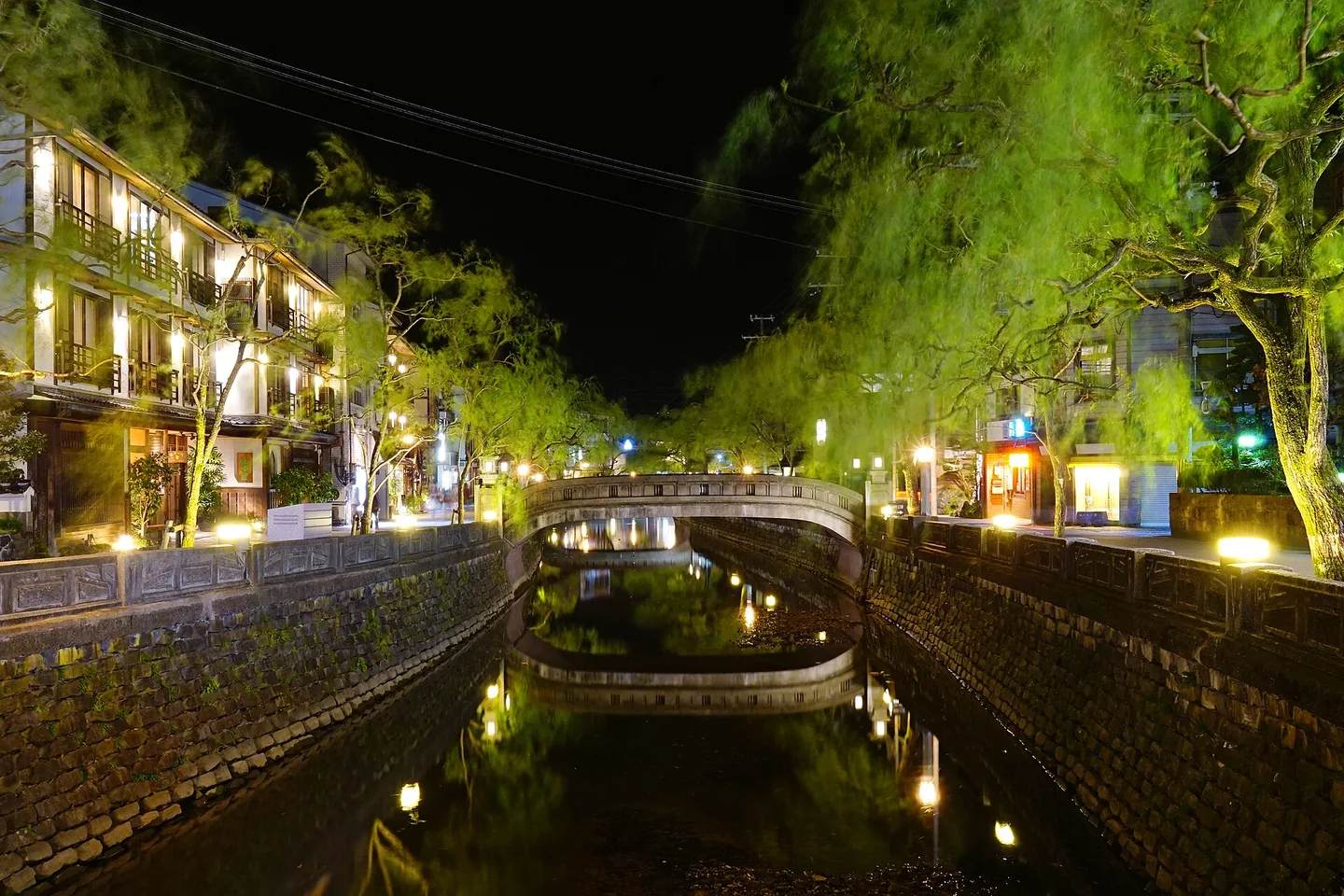
Kinosaki Onsen is a small hot-spring town on the Sea of Japan side of Hyogo where you walk between public bathhouses in a cotton yukata, and most ryokan hand you a free pass to all of them at check-in. It's well worth a night. We list 43 ryokan in Kinosaki Onsen, most from $180 to $720 a night for two, and 29 of them offer a private bath: 6 with a bath in some rooms and 27 with a private bath you book for your party alone (a few have both).
This guide covers how the baths and the pass work, what changed recently (one of the seven bathhouses has been shut since 2024), how to get there from Kyoto, Osaka and Tokyo, and which ryokan suits which kind of trip. Facts and prices were checked on November 20, 2026.
| Kinosaki at a glance | |
|---|---|
| Worth it? | Yes, if you want a real onsen town. It's the classic overnight trip from Kyoto or Osaka. |
| How long? | One night covers it; two nights lets you slow down and reach every open bathhouse. |
| Best for | Couples, first-time ryokan guests, travelers with tattoos, and crab season (November to March). |
| Splurge |  Nishimuraya Honkan |
| Value |  Onishiya Suishoen |
| Private hot-spring baths | 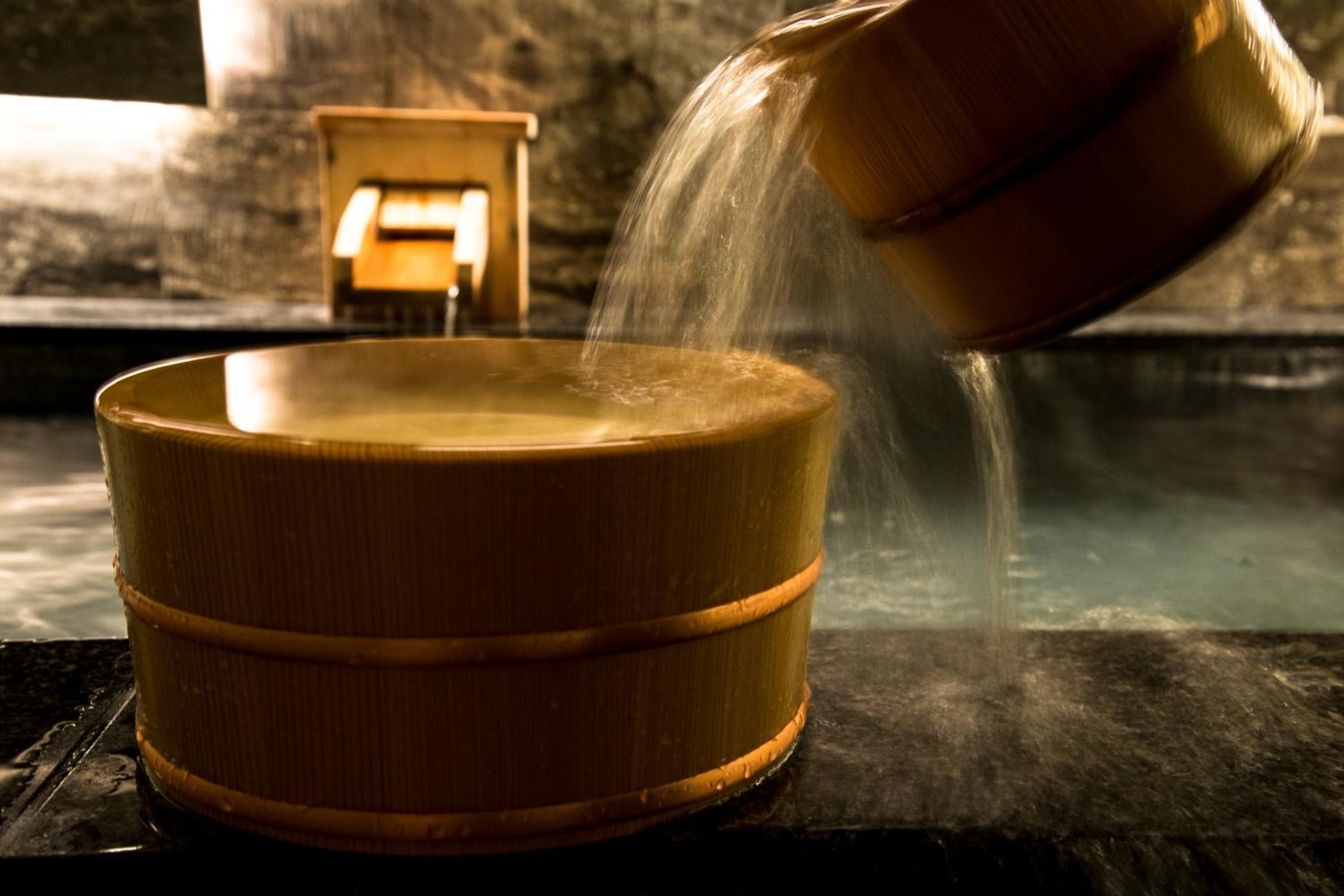 Kinosaki onsen Tokitotoki |
| Adults only |  Kinosaki Onsen Hanakouji Saigetsu |
See all 43 Kinosaki Onsen ryokan, with prices for your dates →
What makes Kinosaki different
Most Japanese hot-spring resorts keep you inside one big hotel. Kinosaki works the other way around. The town's official tourism site traces about 1,300 years of bathing here, and the whole place is set up for walking between bathhouses: a willow-lined river, stone bridges, wooden inns, and enough game arcades and snack stands to fill the walk. The town is small enough to cross on foot in about 20 minutes.
The evening is the point. Guests change into the yukata their inn provides, put on wooden geta sandals, and go out before and after dinner.
The seven public baths
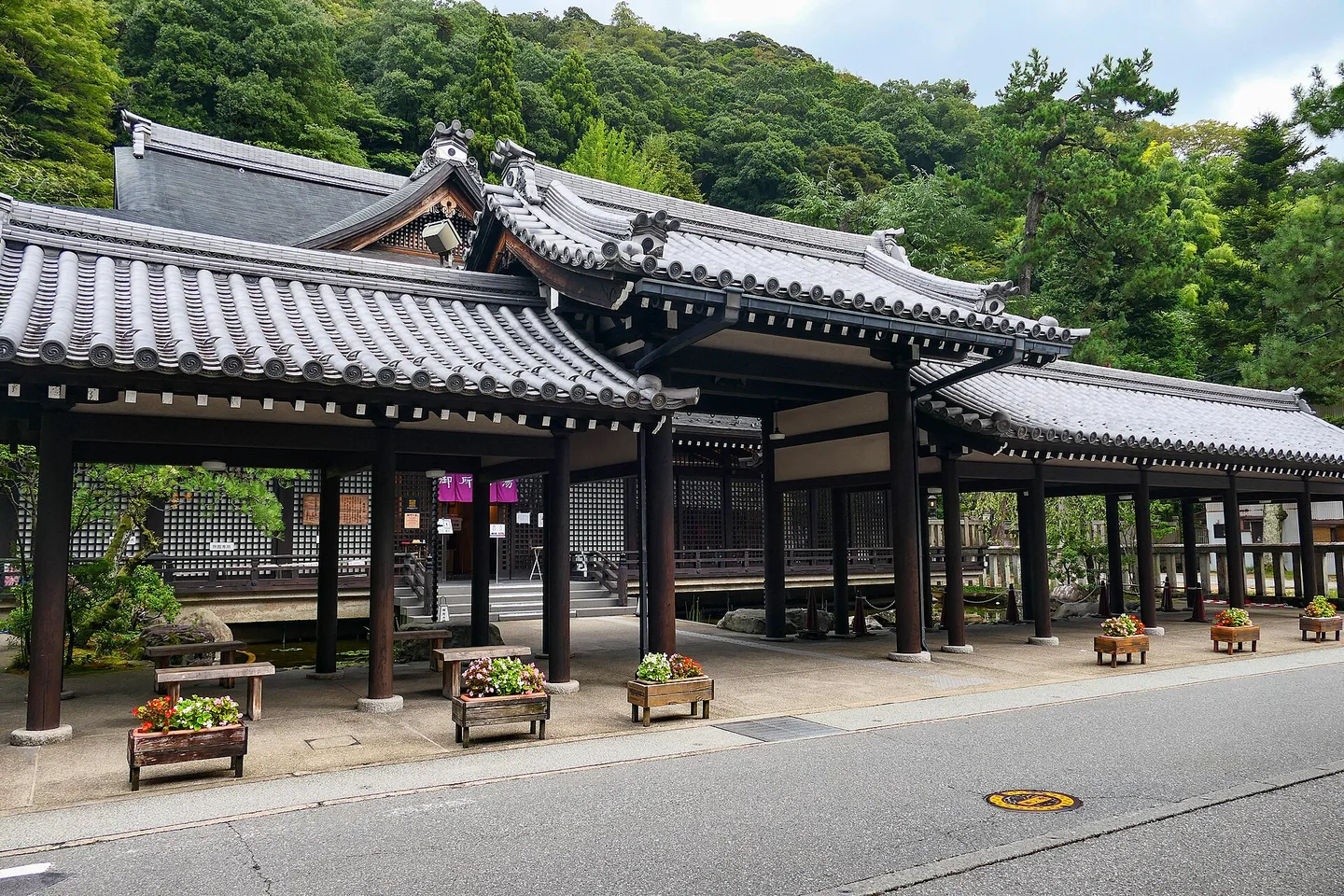
Kinosaki has seven public bathhouses, called soto-yu. All are separated by gender, all require bathing nude (no swimsuits), and all allow tattoos of any size. Each closes one day a week, so check the day before you plan your route. The official site shows live crowd levels for each bath.
| Bathhouse | Open | Closed | Single entry (adult) |
|---|---|---|---|
| Kono-yu | 7:00–23:00 | Tuesday | 800 yen |
| Mandara-yu | 15:00–23:00 | Wednesday | 800 yen |
| Goshono-yu | 7:00–23:00 | Thursday | 800 yen |
| Ichino-yu | 7:00–23:00 | Wednesday | 800 yen |
| Yanagi-yu | 15:00–23:00 | Thursday | 800 yen |
| Jizo-yu | 7:00–23:00 | Monday | 800 yen |
| Satono-yu | Closed for renovation since April 1, 2024 |
Source: Visit Kinosaki, checked November 20, 2026. Children up to 12 pay 400 yen.
Two things older guides get wrong. Satono-yu, the big modern bathhouse next to the station, is often still recommended, but it has been closed for renovation since April 2024 with no reopening date. And Kono-yu, the bath at the far end of town by the ropeway, was closed from May to the end of October 2026 for its own renovation and is open again.
With Satono-yu shut, these are the three I'd start with:
- Goshono-yu, built to look like Kyoto's Imperial Palace, with an outdoor bath beside a waterfall.
- Ichino-yu, whose indoor bath runs into a cave of natural boulders.
- Kono-yu, the oldest bathhouse building in town, with an outdoor bath in the greenery at the quiet back end of town.
Mandara-yu, said to be Kinosaki's first spring, has two small ceramic outdoor tubs; Yanagi-yu, the smallest, has a cypress bath. Both open only from 15:00, which suits the walk before dinner. Jizo-yu is the neighborhood favorite, and it has a lukewarm side bath for children.
The easiest way to bathe in all of them is to stay the night: your ryokan's pass covers every bathhouse. Find a Kinosaki ryokan near the baths →
How the bath pass works
If you stay overnight at a ryokan in town, you'll usually get a free pass to all the public baths at check-in. It stays valid until 13:00 on the day you leave, which is why most guests take a final morning soak after breakfast. The official site advises checking with your inn that it offers the pass, so ask when you book.
Without a stay, you have two options:
- Single entry: 800 yen per bath for adults.
- Yumepa day pass: 1,500 yen for adults (750 yen for children), sold at any bathhouse. It pays for itself from the second bath.
If you're weighing a day trip, a night at an inn like Onishiya Suishoen, with dinner and the free pass, is the better way to see the town.
Is Kinosaki tattoo friendly?
Yes, unusually so for Japan. All seven public bathhouses allow tattoos of any size, with no need to cover them, and the official site says so plainly. The catch is inside the inns: each ryokan sets its own rules for its own baths, and most don't publish them.
Three ways to avoid any awkwardness:
- Use the public baths and treat your inn's bath as optional.
- Book an inn with no shared baths at all. Sensui and Koyado Enn have only private baths, so the question never comes up.
- Book an inn that states it. Kinosaki Onsen Hanakouji Saigetsu allows tattoos in its private baths on the night of your stay.
Our Kinosaki page can filter to these: Kinosaki ryokan where you can bathe privately →
How to ask an inn: a short, polite note when you book works better than asking at the front desk. Something like "One of us has a tattoo. Is it all right to use your baths, or would you recommend the private bath?" Japanese hosts would much rather solve this ahead of time than face it at 10 p.m.
Private baths: what "in-room onsen" really means in Kinosaki
Of the 43 ryokan we list in Kinosaki Onsen, 6 have an open-air bath in some of their rooms, and another 23 have a private bath you can book for your party. That makes Kinosaki a good choice for couples or anyone shy about public bathing.
Here's the detail most guides miss. Kinosaki keeps its hot-spring water for shared baths, so the baths in guest rooms generally run on heated plain water. That's what Nishimuraya Honkan states for its open-air room baths. A room with its own bath is lovely for privacy. If you want actual spring water without strangers, book an inn with private hot-spring baths instead:
- Kinosaki onsen Tokitotoki: two free-flowing hot-spring private baths for just six rooms, open 15:00 to 10:00. Lock the door and they're yours.
- Mikuniya: four indoor hot-spring baths, all private and free, 6:00 to 23:00.
- Sensui: two of its three hot-spring private baths are free to use whenever they're empty, with no booking.
See them all on one page: Kinosaki ryokan with a private bath to book → or with a bath in the room →. For other towns where you can soak alone, see every ryokan with a private onsen in Japan.
Where to stay: the best Kinosaki Onsen ryokan for each kind of trip
Most visitors stay in town and walk everywhere. Twenty of our 43 Kinosaki listings are within walking distance of Kinosaki Onsen Station, and the ryokan association's bus meets limited express trains from 12:30 to 18:00 for the rest. Prices across the town run from about $180 to $720 a night for two, with the middle around $410. These are the typical lowest prices we found across a year of dates, so set your dates on our Kinosaki Onsen ryokan page to see real rates. Here are eight picks, each for a different kind of trip, with details from each inn's page on Ryokan Society (checked November 17–20, 2026).
Nishimuraya Honkan: the splurge
The inn people mean when they say "the" Kinosaki ryokan: 29 rooms, a Relais & Châteaux member, and a registered tangible cultural property. It accepts children from age 10 and takes at most three families with children a day, so families should book early or look elsewhere.
Baths: Three large baths; open-air bath in some rooms. Ages: 10+. Known for: Founded 1854–60; Two Michelin Keys (2026).
See rooms and rates at Nishimuraya Honkan →
Onishiya Suishoen: value and families
Reached on the ryokan association's bus from the station, with dinner in a private dining room. It offers a children's menu and can cater for single-item allergies such as crab.
Baths: Open-air bath, jacuzzi, sauna. Ages: All ages. Known for: Below the town's middle price; 9.3 from 1,289 reviews.
See rooms and rates at Onishiya Suishoen →
Kinosaki onsen Tokitotoki: spring water, privately
Our editors' pick for the water. Rooms have no bath of their own; you use one of the two free-flowing private baths whenever it's free. Note the 22:00 curfew.
Baths: 2 private hot-spring baths. Ages: Not stated. Known for: Six rooms, free-flowing private baths.
See rooms and rates at Tokitotoki →
Sensui: small and quiet

Thirteen rooms and no shared baths, so tattoos are never an issue. Two of its three hot-spring private baths are free whenever they're empty. Guests must be 13 or older.
Baths: 3 private hot-spring baths. Ages: 13+. Known for: 13 rooms, no shared baths.
See rooms and rates at Sensui →
Koyado Enn: Tajima beef

Every dinner is a Tajima beef course in its upstairs restaurant. Its two private baths are free for 40 minutes at a time, three minutes from the station.
Baths: 2 free private hot-spring baths. Ages: 13+. Known for: Dinner is a Tajima beef course; 3 min from the station.
See rooms and rates at Koyado Enn →
Kinosaki Onsen Hanakouji Saigetsu: adults only
For guests 16 and over, three minutes straight down the station street. Book your private bath time at check-in.
Baths: Cypress and granite private baths. Ages: 16+. Known for: Kaiseki in a private dining room.
See rooms and rates at Hanakouji Saigetsu →
Mikuniya: private baths at no extra cost

Four indoor hot-spring baths, all private and free from 6:00 to 23:00, and families are welcome.
Baths: 4 private hot-spring baths. Ages: All ages. Known for: Four free private baths, 3 min from the station.
See rooms and rates at Mikuniya →
Yuraku Kinosaki Spa & Gardens: mixed groups and special diets
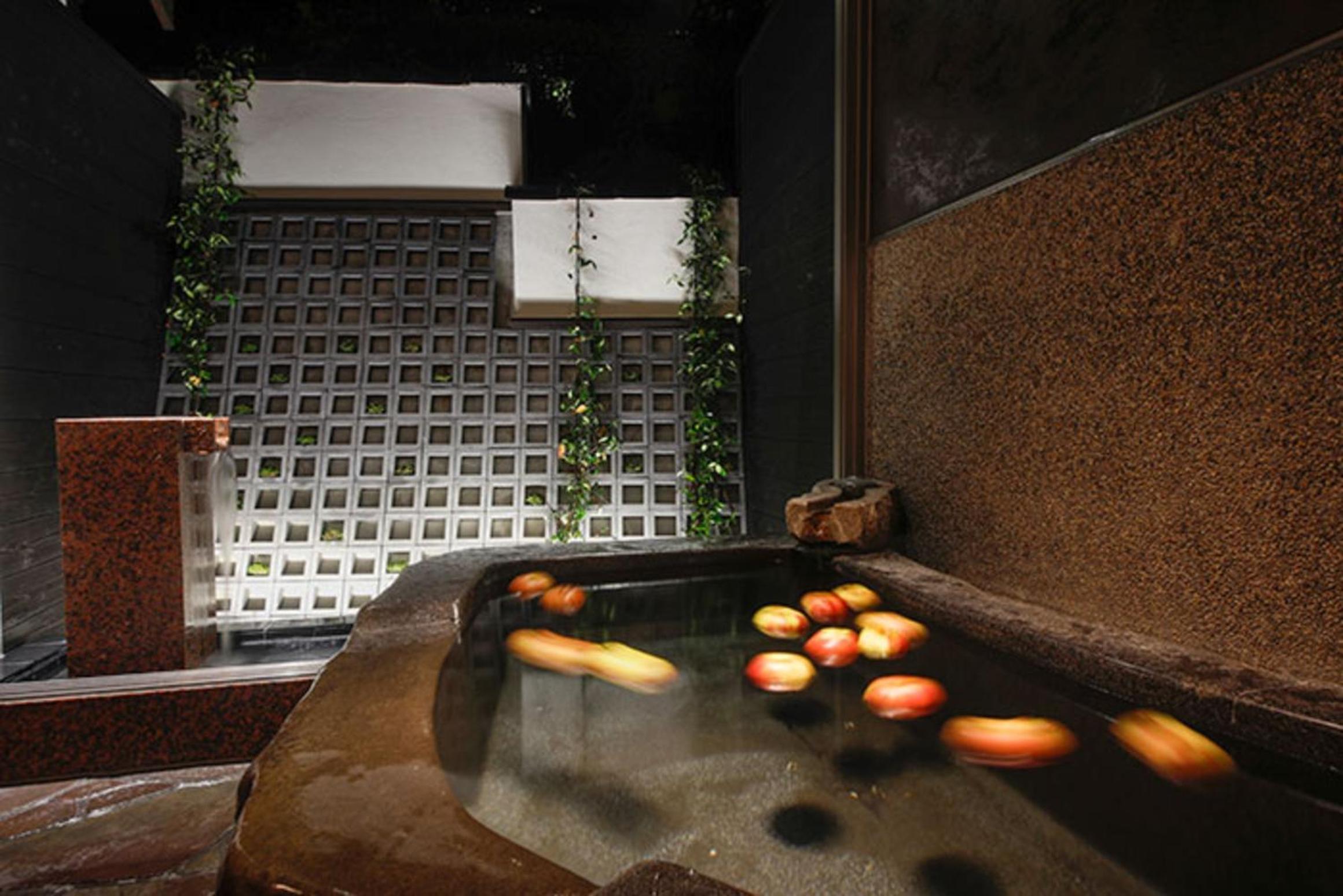
Children of all ages stay (under-3s free), and the kitchen cooks vegetarian, vegan and Muslim-friendly menus; vegan meals need five days' notice.
Baths: Shared baths, 3 free private open-air baths, some rooms with their own bath. Ages: All ages. Known for: Vegetarian, vegan and Muslim-friendly menus; under-3s free.
See rooms and rates at Yuraku →
None of these right for you? Compare all 43 Kinosaki Onsen ryokan →
Our editors choose each pick for one thing it does best, from the inn's own pages, and what we earn plays no part. How we choose.
How long to stay: one night or two?
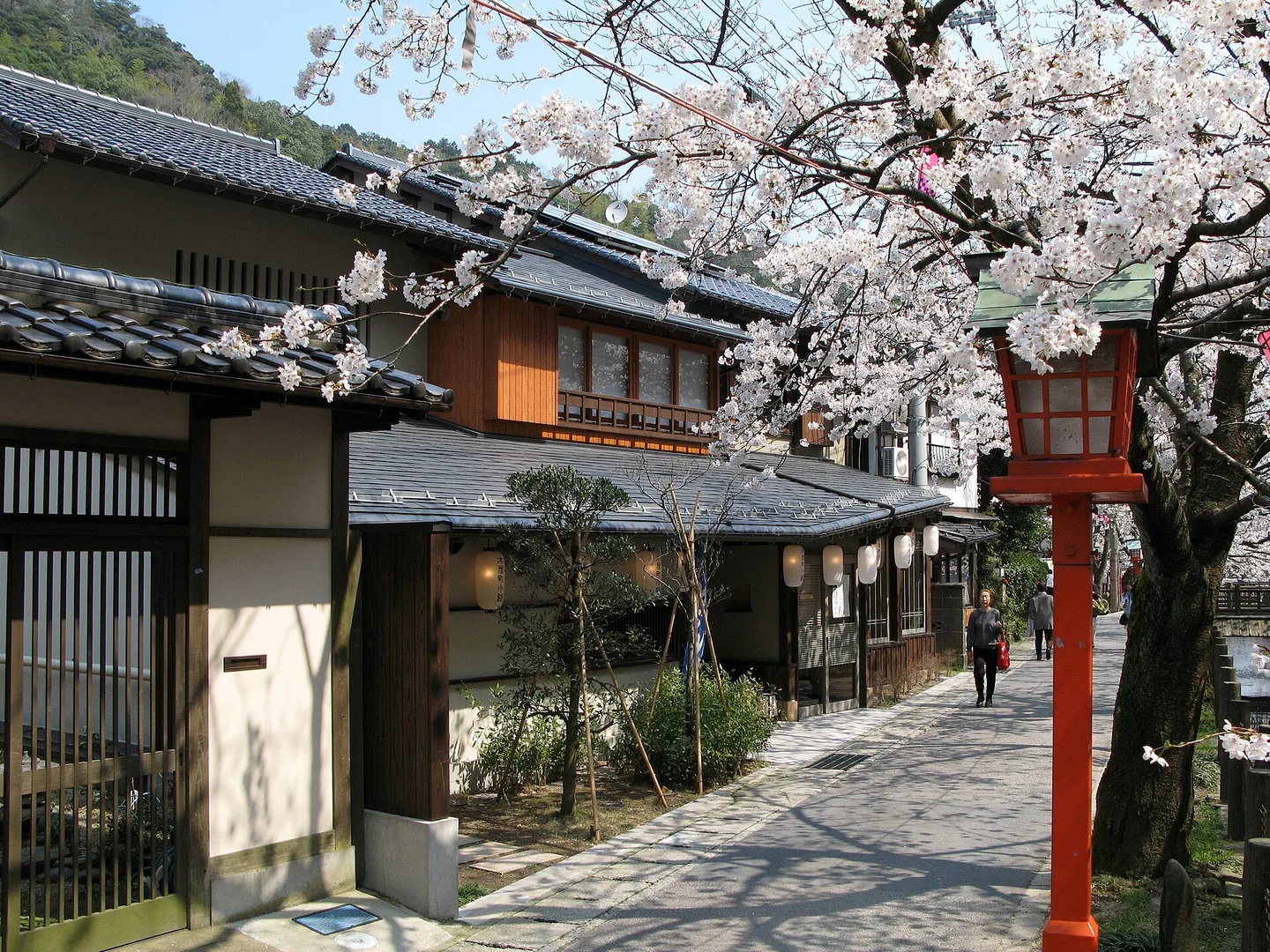
One night is enough for the full experience. Arrive mid-afternoon, check in at 15:00, visit two baths before dinner, walk the river after dinner, and take a last bath in the morning before your pass runs out at 13:00.
Two nights is better if you want to slow down. On any given day one or two bathhouses are closed (two on Wednesdays and Thursdays), so a second day gets you into all six that are open. It also lets you add a half day out: Takeno Beach on the coast in summer, or the old castle town of Izushi. For a second night, a small inn such as Sensui or Tokitotoki keeps it quiet.
A day trip from Kyoto or Osaka is possible, with about five hours on the train for the round trip. You'd pay 1,500 yen for the bath pass and miss the evening, which is the best part. I'd only do it if you can't get a room.
Getting to Kinosaki Onsen from Kyoto, Osaka and Tokyo
Kinosaki Onsen Station is on the JR San'in Line, and the town starts at the station door.
| From | Train | Time | Notes |
|---|---|---|---|
| Kyoto | JR limited express Kinosaki | About 2 h 30 min | Several round trips a day |
| Osaka (Shin-Osaka / Osaka) | JR limited express Kounotori | About 2 h 40 min | More than ten round trips a day; some end at Fukuchiyama, so check for a direct train |
| Tokyo | Tokaido Shinkansen to Kyoto, then the Kinosaki | About 5 h | Change trains at Kyoto Station |
Sources: Ekitan timetable guides (current as of July 2026) and Visit Kinosaki. Check exact departures on the JR West site.
Three things to know before you go:
- All ordinary seats on these limited express trains are now reserved. Older guides tell you to queue for unreserved cars; book a seat online through JR West or at the station instead. Seats go on sale one month ahead and can sell out at busy times.
- The JR Pass covers the trip, as does a JR West rail pass, but you still need a seat reservation.
- Other options: Zentan buses run direct from Osaka and Kobe, and Kounotori Tajima Airport (flights from Osaka Itami) has a bus to Kinosaki timed to each arrival.
Arriving with luggage? These are a few minutes' walk from the station: Koyado Enn, Mikuniya and Hanakouji Saigetsu (3 minutes), Tokitotoki (5 minutes) and Sensui (7 minutes).
When to go
| Season | What's on | Worth knowing |
|---|---|---|
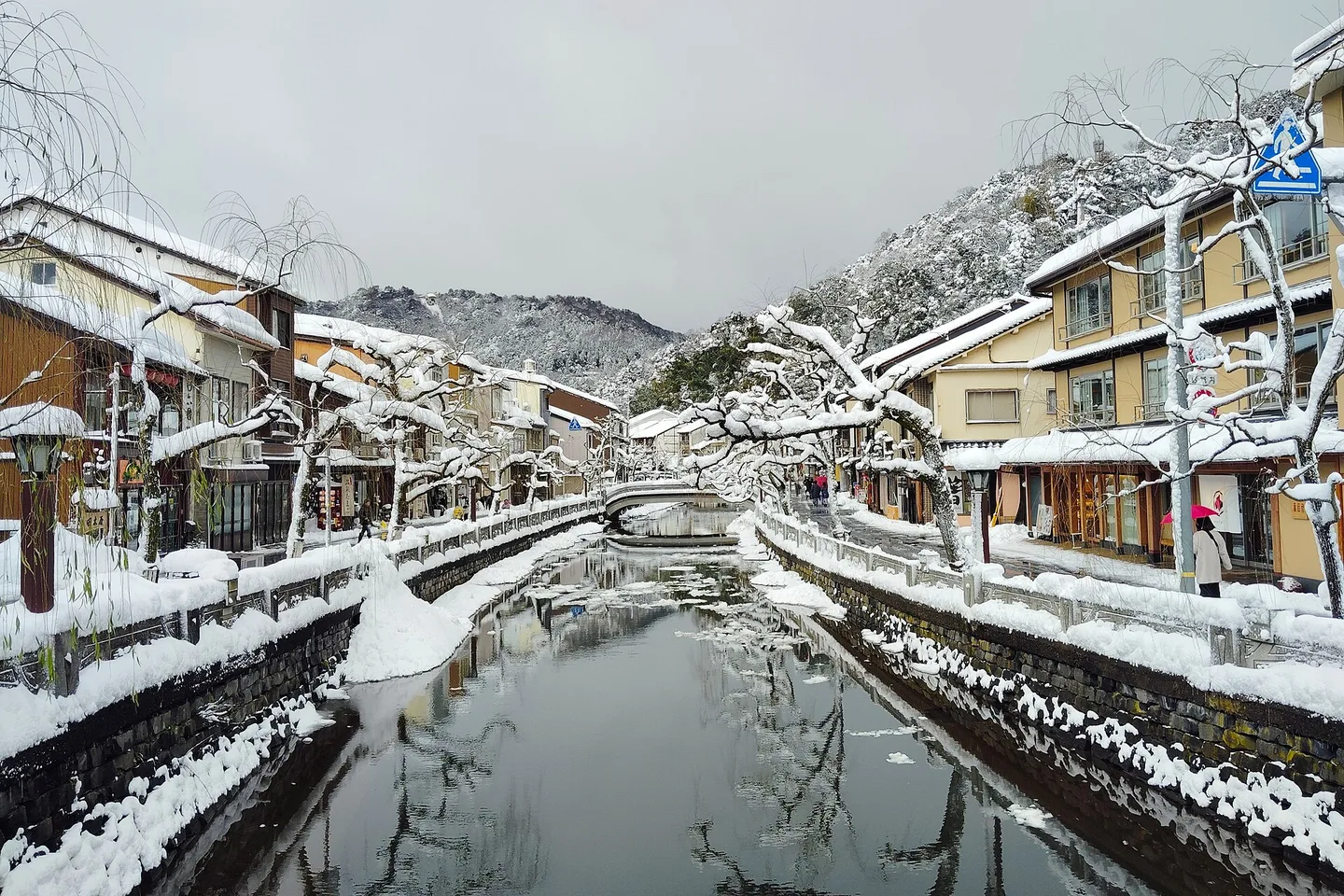
| Winter (mid-Dec to early Mar) | Snow crab season (Nov to Mar); snow on the willows | The busiest time; book early for crab plans |
| Spring | Cherry blossoms, usually the last week of March to the first week of April | Lanterns light the trees in the evening |
| Summer | Lantern festival, fireworks, Takeno Beach | Hot and humid from late July to mid-August |
| Autumn (Sep to Nov) | Foliage around Onsen-ji temple; fall festivals | Comfortable weather, and crab starts in November |
Winter is when most Japanese visitors come. Snow crab, caught just north of town, features in most inns' dinners from November to March, and the official tourism site notes a surge of visitors for it. Locals favor autumn for the comfortable weather and the colors, and it overlaps the start of crab season in November. Winter weekends fill first, so check Kinosaki ryokan for your dates →
Dinner in Kinosaki: crab, Tajima beef, and why to book it with your room
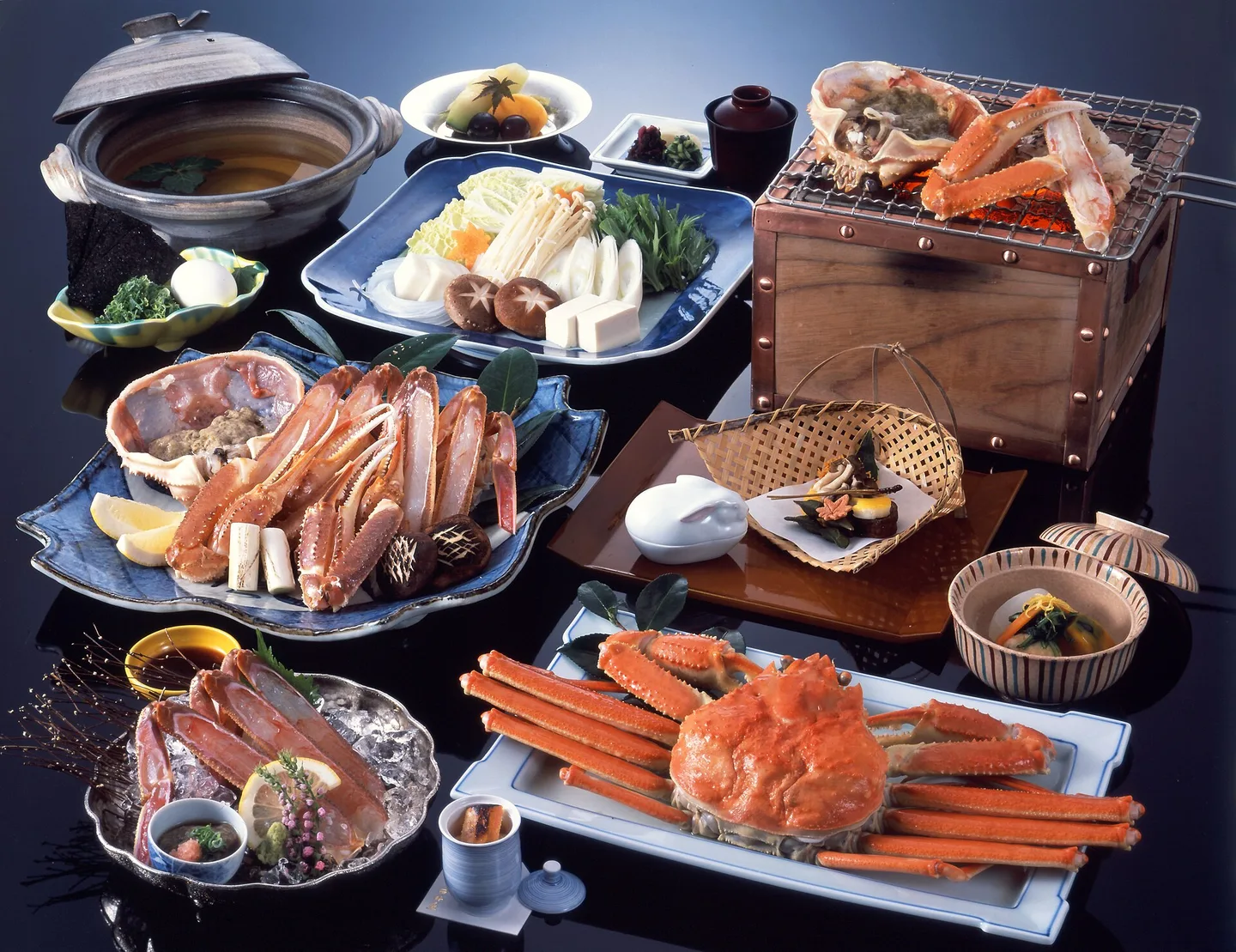
Kinosaki's two famous foods are snow crab (matsuba-gani) in winter and Tajima beef, the local wagyu. Almost every ryokan offers a plan with a multi-course kaiseki dinner, and from November to March it usually centers on crab.
Book dinner with your room. On our inn pages, each plan shows whether dinner is included and where it's served. Many shops and restaurants close for a few hours in the early evening, often between 17:00 and 20:00, because nearly everyone in town is eating at their inn. Room-only plans exist (Kinosaki Onsen Kawaguchiya Honkan, for one, sells only those), but you'll be hunting for a table at the one hour the town eats in.
From Kai: how to read a Kinosaki dinner plan. Inns list the same room under several plans, and the difference is almost always the dinner. In winter you'll see crab plans named by how much crab you get, and the jump in price follows the size and grade of the crab. If crab isn't your thing, a Tajima beef plan is often the better meal for the money. Growing up in a hotel family in Tokyo, I learned that the dinner times an inn offers tell you about its kitchen: a fixed early seating, like Sensui's 17:00 or Nishimuraya Honkan's 17:30 to 18:30, means the courses are timed and brought out one by one, so don't be late back from the bath.
Kinosaki or another onsen town?
Travelers often weigh Kinosaki against these. Counts and prices are from our town pages (most stays, a night for two).
| Town | Where | Ryokan we list | Most stays |
|---|---|---|---|
| Kinosaki Onsen | Hyogo, Sea of Japan coast | 43 | $180–$720 |
| Arima Onsen | Above Kobe | 27 | $180–$720 |
| Hakone | Near Tokyo | 101 | $180–$960 |
| Kusatsu Onsen | Gunma, north of Tokyo | 24 | $150–$430 |
| Kurokawa Onsen | Kyushu | 26 | $240–$770 |
Kinosaki is the one to pick if you want to walk between bathhouses in a yukata. If your trip is based in Kyoto or Osaka and you'd rather not travel far, browse all ryokan near Kyoto and Osaka.
Kinosaki Onsen FAQ
Is Kinosaki Onsen worth visiting? Yes. It's one of the few towns in Japan where bathing is the whole evening, you can walk everywhere, and tattoos are welcome in every public bath. If you're in Kyoto or Osaka with a free night, it's the most rewarding onsen trip within about two and a half hours.
Is Kinosaki Onsen mixed gender? No. All seven public bathhouses have separate men's and women's baths, and you bathe nude. To bathe together as a couple or family, book a Kinosaki ryokan with a private bath you can reserve.
How much is the Kinosaki Onsen pass, and where do I buy it? Overnight guests usually get it free from their ryokan, valid until 13:00 on check-out day. Day visitors can buy the Yumepa pass for 1,500 yen (750 yen for children) at any bathhouse, or pay 800 yen per bath. Staying the night is better value: see ryokan in Kinosaki Onsen.
How far is Kinosaki Onsen from Kyoto and Osaka? About 2 hours 30 minutes from Kyoto on the limited express Kinosaki, and about 2 hours 40 minutes from Shin-Osaka on the Kounotori. From Tokyo, allow about 5 hours with a change in Kyoto.
What time do the baths close? Most public baths close at 23:00. Kono-yu, Goshono-yu, Ichino-yu and Jizo-yu open at 7:00; Mandara-yu and Yanagi-yu open at 15:00.
Is Kinosaki Onsen touristy or crowded? It's busiest in crab season, from mid-December into early March. It is touristy in the sense that the whole town exists for bathing visitors, but it has kept its old wooden streets, and the official site's live crowd status for each bathhouse helps you pick a quieter one.
Is Kinosaki Onsen kid friendly? Yes. The official tourism office runs a family guide, Jizo-yu has a lukewarm children's bath, and many inns welcome children: Onishiya Suishoen and Yuraku Kinosaki Spa & Gardens take all ages, and Mikuniya welcomes families. Some top inns set age limits, such as Nishimuraya Honkan (10 and over) and Sensui (13 and over). See Kinosaki ryokan that welcome children.
What is Kinosaki Onsen known for? Its seven public bathhouses and the yukata-and-clogs walk between them, snow crab in winter, and Tajima beef. It's also known as one of the most tattoo-friendly onsen towns in Japan.
Book your Kinosaki Onsen ryokan
We list all 43 ryokan in Kinosaki Onsen with private baths, dinner plans and children's rules shown room by room. Jump straight to the stays that fit:
- Ryokan with a bath in the room
- Ryokan with a private bath to book
- Ryokan where you can bathe privately with tattoos
- Ryokan that welcome children
See all 43 Kinosaki Onsen ryokan →
About the author
Kai Sulkin is the founder of Ryokan Society. He grew up in Tokyo in a hotel family, learned Japanese hospitality from the back of the house, and now splits his time between Tokyo and New York City. More about Kai Sulkin →
Photo credits
- Otani River at night (top): 663highland, CC BY 2.5, via Wikimedia Commons
- Goshono-yu: MaedaAkihiko, CC0, via Wikimedia Commons
- Cherry blossoms: Samchan91, CC BY-SA 4.0, via Wikimedia Commons
- Otani River in snow: Asturio Cantabrio, CC BY-SA 4.0, via Wikimedia Commons
- Snow crab kaiseki: Nishimuraya Kinosaki Onsen, CC BY 2.0, via Wikimedia Commons
- Ryokan photos: courtesy of each ryokan, as shown on its Ryokan Society page